






The Kano State Government has officially banned a group operating under the name Independent Hisbah Fisabilillahi, declaring its activities illegal and a potential threat to public safety and order in the state.
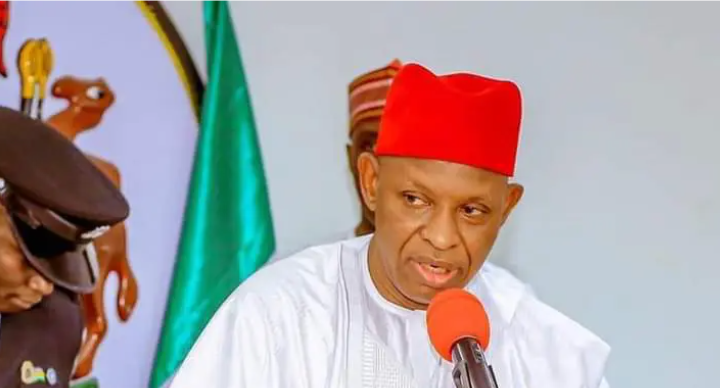
Governor Abba Kabir Yusuf signed an executive order on December 8, proscribing the group after intelligence reports indicated that its operations violated existing laws regulating religious enforcement bodies in Kano State. According to the government, the group was allegedly involved in the recruitment, training, and mobilisation of youths without legal backing, in direct contravention of the Kano State Hisbah Board Law.
Speaking to journalists, the Commissioner for Information and Internal Affairs, Ibrahim Waiya, stressed that the Kano State Hisbah Board remains the only body legally authorised to coordinate Hisbah-related activities across the state. He warned that the emergence of parallel structures poses serious security risks.
“The emergence of a parallel group amounts to creating an unauthorised enforcement structure capable of undermining public peace and the statutory mandate of the Board,” Waiya said.
Waiya explained that the executive order renders all activities of the banned group null and void. He noted that any attempt to impersonate the Hisbah Board through the use of uniforms, symbols, or assumed authority would attract sanctions under the law.
According to him, the order explicitly declares the group’s operations “unlawful, illegal and void.”
The commissioner further disclosed that Governor Yusuf has directed security agencies—including the Nigeria Police Force, the Department of State Services (DSS), the Nigeria Security and Civil Defence Corps (NSCDC), and other relevant bodies—to investigate individuals behind the formation of the group and take appropriate legal steps to prevent any breakdown of public order.
Residents of the state were cautioned against associating with or supporting the outlawed organisation, as affiliation constitutes a violation of state law. Waiya urged individuals already recruited by the group to disengage immediately and report to the nearest security agency, Hisbah office, or local government authority.
He added that the executive order outlines penalties for offenders, including prosecution for unlawful assembly, impersonation, and the establishment of unauthorised security formations. The order takes immediate effect and is expected to be gazetted by the state government printer.
Link to Ganduje Remarks and Rising Tensions
The ban comes amid growing tension in Kano over alleged plans to establish parallel religious policing outfits. On November 28, the state government called for the arrest of former governor Abdullahi Umar Ganduje over comments it described as “capable of undermining” the state’s security architecture.
Following a meeting of the State Executive Council, Waiya said cabinet members reviewed statements allegedly made by Ganduje and Deputy Senate President Barau Jibrin, suggesting that Kano is vulnerable to banditry and proposing the recruitment of 12,000 individuals under a religious policing initiative known as Khairul Nas.
“The council deliberated extensively over the recent inflammatory statements made by a former Governor Abdullahi Umar Ganduje and the deputy senate president Barau Jibrin, who alleged that the state is vulnerable to banditry and further announced plans to recruit 12,000 individuals under a proposed religious police outfit named Khairul Nas,” the commissioner said.
Civil Society Reactions
Civil society organisations have also expressed concern over reports of attempts to establish a Hisbah-style body outside the control of the state government. The International Peace and Secure Society (IPSS) described allegations linking Ganduje to such moves as “troubling and unacceptable,” warning that unregulated security formations could escalate instability.
Ganduje, however, has rejected the allegations, dismissing the call for his arrest as “baseless” and “reckless.” The former APC National Chairman insisted that he has never been involved in violence or any actions capable of undermining peace in Kano State.
He accused the current administration of “desperation” and “incompetence,” arguing that the statements attributed to the government reflected “an abdication of responsibility by a leader who has failed to secure the lives and property of citizens.”